
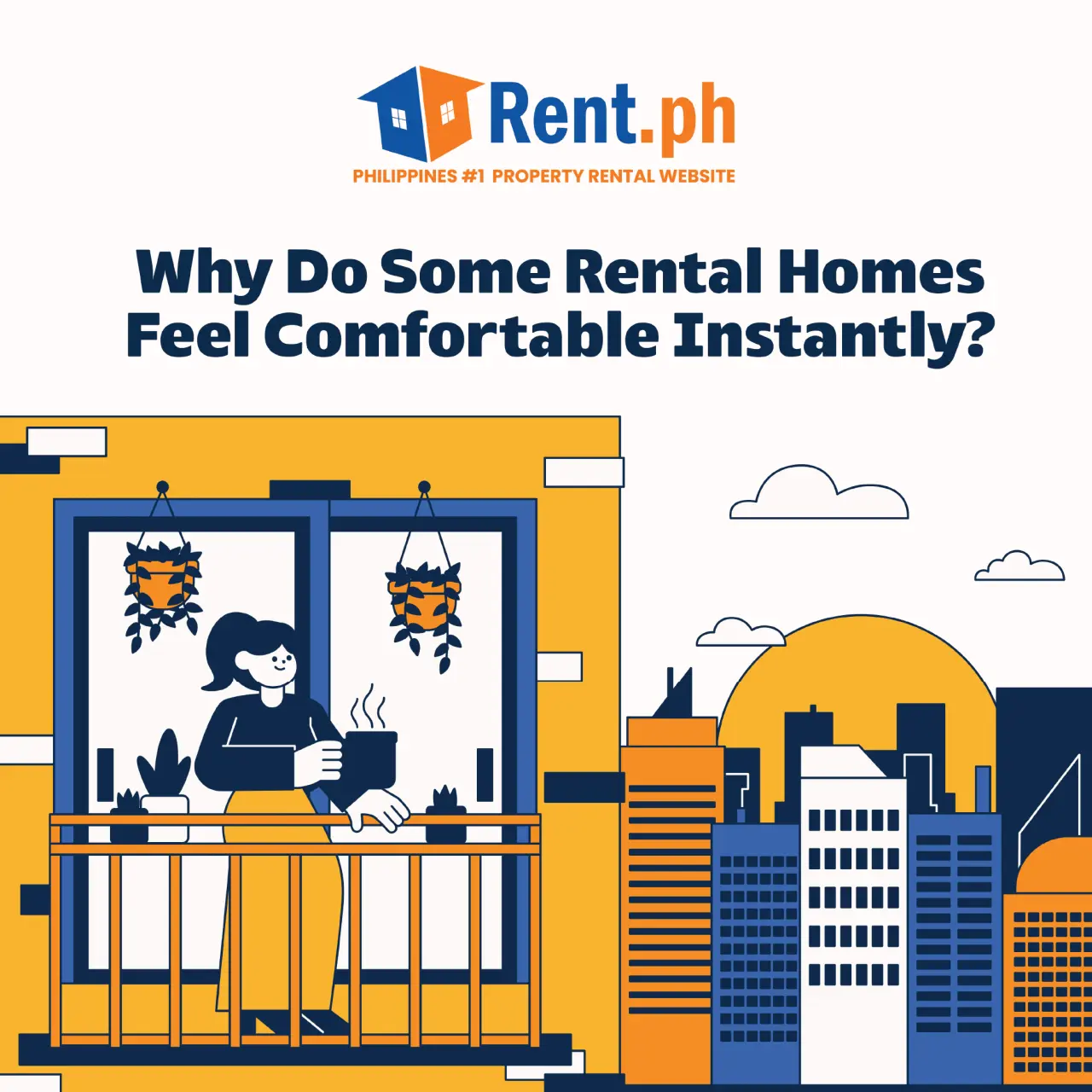
Finding a rental home isn't always about checking off a list of amenities. Sometimes, you step inside a unit and instantly think, "This feels like home." Other times, even a larger or more expensive apartment can feel cold, uncomfortable, or unwelcoming.
Why does this happen?
The answer lies in the psychology of space. Our brains constantly interpret our surroundings through light, color, airflow, proportions, textures, and layout—even before we consciously notice them. These subtle design elements influence our mood, stress levels, productivity, and overall well-being.
Whether you're searching for your next apartment, condo, or house for rent in the Philippines, understanding what makes a space feel comfortable can help you choose a home you'll genuinely enjoy living in.
Here's why some rental homes instantly feel better than others.
Your Brain Judges a Space Within Seconds
Research in environmental psychology suggests that people form impressions about indoor spaces almost immediately. Within moments of entering a room, your brain begins evaluating questions such as:
- Is this place safe?
- Can I relax here?
- Is it bright or gloomy?
- Does it feel crowded?
- Will I enjoy spending time here?
These reactions happen automatically. They're influenced by years of experience, cultural preferences, and biological responses to light and space.
That's why two apartments with nearly identical floor areas can create completely different emotional reactions.
1. Natural Lighting Makes a Huge Difference
Perhaps the biggest factor influencing comfort is natural light.
Bright spaces naturally make people feel:
- More energetic
- Happier
- More productive
- Less stressed
- More awake during the day
Sunlight also helps regulate our body's internal clock, improving sleep quality and overall mood.
When viewing a rental property, visit during daytime whenever possible. Observe:
- How much sunlight enters the rooms?
- Which areas remain dark?
- Does the unit require lights even during the afternoon?
- Are windows blocked by neighboring buildings?
Homes with generous natural lighting often feel larger, cleaner, and more inviting.
2. Good Ventilation Creates Instant Comfort
Anyone living in the Philippines understands the importance of airflow.
A beautifully designed apartment can still feel uncomfortable if it's hot and stuffy.
Proper ventilation offers several benefits:
- Better indoor air quality
- Reduced humidity
- Less mold growth
- Lower indoor temperatures
- Improved comfort without relying solely on air conditioning
Cross ventilation—where air flows from one side of the home to another—is especially valuable.
During a viewing, try opening windows and doors. Feel whether fresh air moves naturally through the unit.
If the air feels trapped, imagine living there during the hottest months of summer.
3. Layout Matters More Than Size
Many renters focus on square meters.
But layout often matters far more than total floor area.
A well-designed 25-square-meter studio can feel more spacious than a poorly arranged 35-square-meter apartment.
Good layouts provide:
- Clear walking paths
- Defined living areas
- Easy furniture placement
- Efficient storage opportunities
- Comfortable room proportions
Poor layouts often create:
- Awkward corners
- Wasted space
- Narrow hallways
- Furniture obstacles
- Crowded living conditions
Always imagine where your existing furniture would go before signing a lease.
4. Ceiling Height Changes How a Home Feels
High ceilings can make even compact homes feel open and relaxing.
Lower ceilings aren't necessarily bad, but they can sometimes create a sense of confinement—especially in rooms with limited natural light.
If you're choosing between two similar rental units, notice:
- How open does the ceiling feel?
- Are there exposed beams?
- Does the room feel airy?
These details subtly affect how spacious a home appears.
5. Color Influences Your Mood Every Day
Colors affect emotions more than most people realize.
Neutral tones such as:
- White
- Beige
- Cream
- Light gray
often create feelings of calmness and cleanliness.
Soft earth tones make spaces feel warm and cozy.
Meanwhile, overly dark walls can sometimes make small rooms appear even smaller.
That doesn't mean colorful homes are bad.
Instead, balanced colors usually create the most comfortable environment.
If you're renting, remember that furniture, curtains, rugs, and decorations can dramatically change how wall colors feel.
6. Less Visual Clutter Feels More Relaxing
Our brains constantly process visual information.
A room filled with clutter, excessive decorations, or awkward furniture arrangements can increase mental fatigue.
Simple, organized spaces often feel:
- Peaceful
- Cleaner
- Easier to maintain
- More spacious
This doesn't require expensive furniture.
Even a modest apartment can feel luxurious when it is organized well.
7. Windows Connect Us With Nature
Humans naturally enjoy visual access to outdoor environments.
Even a small window overlooking:
- Trees
- Gardens
- Mountains
- Open skies
- Quiet streets
can improve emotional well-being.
Studies consistently show that seeing natural scenery reduces stress and improves concentration.
If your rental doesn't offer spectacular views, adding indoor plants can create a similar calming effect.
8. Noise Levels Affect Comfort More Than You Think
Comfort isn't only visual.
Sound plays an enormous role.
When viewing a rental, pause for a minute without talking.
Ask yourself:
- Can you hear heavy traffic?
- Barking dogs?
- Karaoke?
- Construction?
- Loud neighbors?
Some noise is unavoidable, especially in busy cities.
However, constant unwanted noise can affect:
- Sleep
- Productivity
- Stress levels
- Overall happiness
9. Storage Reduces Everyday Stress
Living comfortably isn't about owning more things.
It's about having a place for the things you already own.
Rental homes with practical storage solutions often feel more peaceful because daily clutter is easier to manage.
Look for:
- Built-in cabinets
- Kitchen storage
- Bathroom shelves
- Bedroom closets
- Extra utility areas
Hidden storage makes even smaller homes feel significantly larger.
10. Cleanliness Creates Positive First Impressions
Psychologically, cleanliness communicates safety.
A freshly cleaned rental instantly feels more welcoming than one with dust, stains, or unpleasant odors.
Pay attention to:
- Bathroom condition
- Kitchen cleanliness
- Mold
- Ceiling stains
- Window tracks
- Corners
These small details reveal how well the property has been maintained.
11. Comfortable Temperatures Matter
The Philippines experiences warm weather for much of the year.
A comfortable home should naturally remain cooler whenever possible.
Factors that help include:
- Proper window placement
- Shade from nearby trees
- Roof insulation
- Airflow
- Curtains that reduce heat
Some units require air conditioning all day simply because of poor design.
Energy-efficient homes save money while improving comfort.
12. Personalization Turns a Rental Into a Home
Even the nicest apartment won't feel like home until it reflects your personality.
Simple additions can make a dramatic difference:
- Family photos
- Artwork
- Throw pillows
- Cozy lighting
- Indoor plants
- Books
- Rugs
- Decorative baskets
These personal touches help build emotional attachment to your living space—even if you're only renting temporarily.
Always check your lease agreement before making permanent changes such as painting walls or installing shelves.
Trust Your Feelings During Property Viewings
Rental decisions are often based on price, location, and amenities.
Those factors certainly matter.
But don't ignore your instincts.
If a space immediately feels calm, bright, comfortable, and welcoming, there's usually a reason.
Likewise, if something feels "off," take time to identify why before signing a lease.
Ask yourself:
- Can I picture myself relaxing here?
- Would I enjoy waking up in this room?
- Does this home reduce stress—or create it?
- Does the space fit my daily routine?
Sometimes your emotional reaction is pointing out practical design strengths or weaknesses that your brain has already noticed.
Finding a Rental That Supports Your Well-Being
The perfect rental isn't necessarily the biggest or the most expensive.
Instead, it's the one that supports your lifestyle, mental well-being, and daily routines.
A home with natural light, fresh airflow, smart layout, calming colors, practical storage, and thoughtful design can make everyday life more enjoyable—even on a modest budget.
When browsing rental listings, don't focus solely on monthly rent or floor area. Look beyond the numbers and imagine how the space will make you feel every single day.
Because at the end of the day, a home isn't just where you sleep.
It's where you recharge, create memories, build routines, and find comfort after a busy day. Choosing a rental that feels right from the moment you walk in can make all the difference in your quality of life.
Website Post
Why Some Rental Homes Feel Right the Moment You Walk In: The Psychology Behind Comfortable Living Spaces
Finding a rental home isn't always about checking off a list of amenities. Sometimes, you step inside a unit and instantly think, "This feels like home." Other times, even a larger or more expensive apartment can feel cold, uncomfortable, or unwelcoming.
Why does this happen?
The answer lies in the psychology of space. Our brains constantly interpret our surroundings through light, color, airflow, proportions, textures, and layout—even before we consciously notice them. These subtle design elements influence our mood, stress levels, productivity, and overall well-being.
Whether you're searching for your next apartment, condo, or house for rent in the Philippines, understanding what makes a space feel comfortable can help you choose a home you'll genuinely enjoy living in.
Here's why some rental homes instantly feel better than others.
Your Brain Judges a Space Within Seconds
Research in environmental psychology suggests that people form impressions about indoor spaces almost immediately. Within moments of entering a room, your brain begins evaluating questions such as:
- Is this place safe?
- Can I relax here?
- Is it bright or gloomy?
- Does it feel crowded?
- Will I enjoy spending time here?
These reactions happen automatically. They're influenced by years of experience, cultural preferences, and biological responses to light and space.
That's why two apartments with nearly identical floor areas can create completely different emotional reactions.
1. Natural Lighting Makes a Huge Difference
Perhaps the biggest factor influencing comfort is natural light.
Bright spaces naturally make people feel:
- More energetic
- Happier
- More productive
- Less stressed
- More awake during the day
Sunlight also helps regulate our body's internal clock, improving sleep quality and overall mood.
When viewing a rental property, visit during daytime whenever possible. Observe:
- How much sunlight enters the rooms?
- Which areas remain dark?
- Does the unit require lights even during the afternoon?
- Are windows blocked by neighboring buildings?
Homes with generous natural lighting often feel larger, cleaner, and more inviting.
2. Good Ventilation Creates Instant Comfort
Anyone living in the Philippines understands the importance of airflow.
A beautifully designed apartment can still feel uncomfortable if it's hot and stuffy.
Proper ventilation offers several benefits:
- Better indoor air quality
- Reduced humidity
- Less mold growth
- Lower indoor temperatures
- Improved comfort without relying solely on air conditioning
Cross ventilation—where air flows from one side of the home to another—is especially valuable.
During a viewing, try opening windows and doors. Feel whether fresh air moves naturally through the unit.
If the air feels trapped, imagine living there during the hottest months of summer.
3. Layout Matters More Than Size
Many renters focus on square meters.
But layout often matters far more than total floor area.
A well-designed 25-square-meter studio can feel more spacious than a poorly arranged 35-square-meter apartment.
Good layouts provide:
- Clear walking paths
- Defined living areas
- Easy furniture placement
- Efficient storage opportunities
- Comfortable room proportions
Poor layouts often create:
- Awkward corners
- Wasted space
- Narrow hallways
- Furniture obstacles
- Crowded living conditions
Always imagine where your existing furniture would go before signing a lease.
4. Ceiling Height Changes How a Home Feels
High ceilings can make even compact homes feel open and relaxing.
Lower ceilings aren't necessarily bad, but they can sometimes create a sense of confinement—especially in rooms with limited natural light.
If you're choosing between two similar rental units, notice:
- How open does the ceiling feel?
- Are there exposed beams?
- Does the room feel airy?
These details subtly affect how spacious a home appears.
5. Color Influences Your Mood Every Day
Colors affect emotions more than most people realize.
Neutral tones such as:
- White
- Beige
- Cream
- Light gray
often create feelings of calmness and cleanliness.
Soft earth tones make spaces feel warm and cozy.
Meanwhile, overly dark walls can sometimes make small rooms appear even smaller.
That doesn't mean colorful homes are bad.
Instead, balanced colors usually create the most comfortable environment.
If you're renting, remember that furniture, curtains, rugs, and decorations can dramatically change how wall colors feel.
6. Less Visual Clutter Feels More Relaxing
Our brains constantly process visual information.
A room filled with clutter, excessive decorations, or awkward furniture arrangements can increase mental fatigue.
Simple, organized spaces often feel:
- Peaceful
- Cleaner
- Easier to maintain
- More spacious
This doesn't require expensive furniture.
Even a modest apartment can feel luxurious when it is organized well.
7. Windows Connect Us With Nature
Humans naturally enjoy visual access to outdoor environments.
Even a small window overlooking:
- Trees
- Gardens
- Mountains
- Open skies
- Quiet streets
can improve emotional well-being.
Studies consistently show that seeing natural scenery reduces stress and improves concentration.
If your rental doesn't offer spectacular views, adding indoor plants can create a similar calming effect.
8. Noise Levels Affect Comfort More Than You Think
Comfort isn't only visual.
Sound plays an enormous role.
When viewing a rental, pause for a minute without talking.
Ask yourself:
- Can you hear heavy traffic?
- Barking dogs?
- Karaoke?
- Construction?
- Loud neighbors?
Some noise is unavoidable, especially in busy cities.
However, constant unwanted noise can affect:
- Sleep
- Productivity
- Stress levels
- Overall happiness
9. Storage Reduces Everyday Stress
Living comfortably isn't about owning more things.
It's about having a place for the things you already own.
Rental homes with practical storage solutions often feel more peaceful because daily clutter is easier to manage.
Look for:
- Built-in cabinets
- Kitchen storage
- Bathroom shelves
- Bedroom closets
- Extra utility areas
Hidden storage makes even smaller homes feel significantly larger.
10. Cleanliness Creates Positive First Impressions
Psychologically, cleanliness communicates safety.
A freshly cleaned rental instantly feels more welcoming than one with dust, stains, or unpleasant odors.
Pay attention to:
- Bathroom condition
- Kitchen cleanliness
- Mold
- Ceiling stains
- Window tracks
- Corners
These small details reveal how well the property has been maintained.
11. Comfortable Temperatures Matter
The Philippines experiences warm weather for much of the year.
A comfortable home should naturally remain cooler whenever possible.
Factors that help include:
- Proper window placement
- Shade from nearby trees
- Roof insulation
- Airflow
- Curtains that reduce heat
Some units require air conditioning all day simply because of poor design.
Energy-efficient homes save money while improving comfort.
12. Personalization Turns a Rental Into a Home
Even the nicest apartment won't feel like home until it reflects your personality.
Simple additions can make a dramatic difference:
- Family photos
- Artwork
- Throw pillows
- Cozy lighting
- Indoor plants
- Books
- Rugs
- Decorative baskets
These personal touches help build emotional attachment to your living space—even if you're only renting temporarily.
Always check your lease agreement before making permanent changes such as painting walls or installing shelves.
Trust Your Feelings During Property Viewings
Rental decisions are often based on price, location, and amenities.
Those factors certainly matter.
But don't ignore your instincts.
If a space immediately feels calm, bright, comfortable, and welcoming, there's usually a reason.
Likewise, if something feels "off," take time to identify why before signing a lease.
Ask yourself:
- Can I picture myself relaxing here?
- Would I enjoy waking up in this room?
- Does this home reduce stress—or create it?
- Does the space fit my daily routine?
Sometimes your emotional reaction is pointing out practical design strengths or weaknesses that your brain has already noticed.
Finding a Rental That Supports Your Well-Being
The perfect rental isn't necessarily the biggest or the most expensive.
Instead, it's the one that supports your lifestyle, mental well-being, and daily routines.
A home with natural light, fresh airflow, smart layout, calming colors, practical storage, and thoughtful design can make everyday life more enjoyable—even on a modest budget.
When browsing rental listings, don't focus solely on monthly rent or floor area. Look beyond the numbers and imagine how the space will make you feel every single day.
Because at the end of the day, a home isn't just where you sleep.
It's where you recharge, create memories, build routines, and find comfort after a busy day. Choosing a rental that feels right from the moment you walk in can make all the difference in your quality of life.
Read Next
More articles coming soon!