
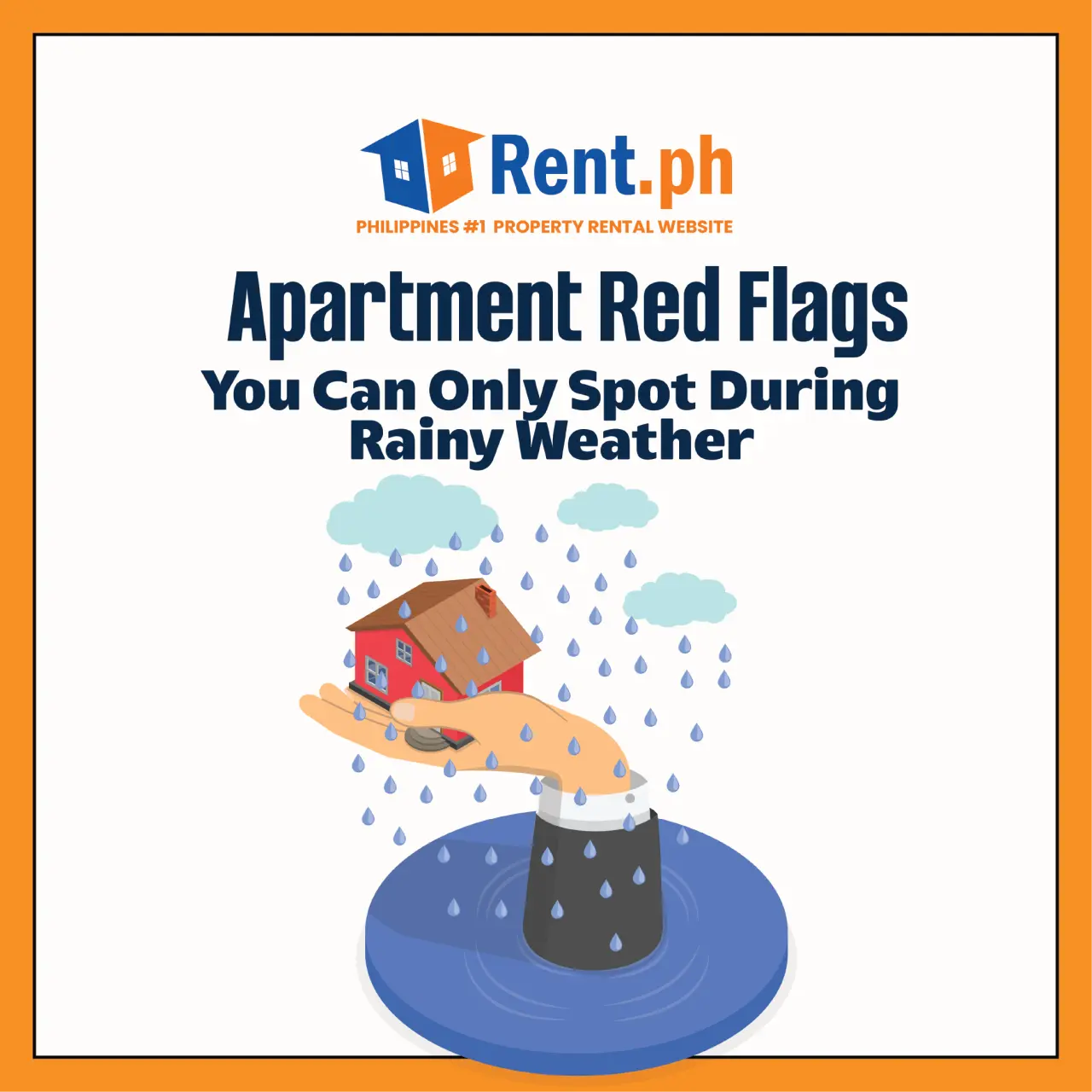
The rainy season in the Philippines can be inconvenient, but for apartment hunters, it can actually be one of the best times to inspect a rental property.
While sunny weather makes every apartment look clean and inviting, heavy rain reveals problems that landlords—and sometimes even current tenants—may not notice until it's too late. Roof leaks suddenly appear, drainage systems overflow, walls become damp, and common areas turn dangerously slippery.
If you're searching for your next rental home, don't think of rainy days as an obstacle. Instead, see them as an opportunity to inspect how well a property holds up when faced with real weather conditions.
Here are the biggest apartment red flags you can only spot during rainy weather—and why paying attention to them could save you from costly repairs, damaged belongings, and unnecessary stress.
1. Water Leaks on the Ceiling and Walls
One of the most obvious signs of a poorly maintained apartment is water leaking through the ceiling or walls during heavy rain.
Sometimes, leaks are dramatic, with water dripping into buckets. Other times, they're much harder to notice.
Look for:
- Yellow or brown water stains
- Peeling paint
- Bubbling wall surfaces
- Damp patches
- Moldy corners
- Freshly repainted ceiling sections that look different from the rest
Fresh paint isn't always a bad sign, but if only one area has recently been repainted, ask why.
Even a tiny leak can worsen over time, damaging furniture, electronics, clothing, and important documents.
Don't hesitate to ask the landlord:
- Has the roof been repaired recently?
- Have previous tenants reported leaks?
- What happens if a leak appears after moving in?
Responsible landlords should be transparent about maintenance history.
2. Poor Roof Condition
Not every roof problem causes an immediate leak.
Sometimes you'll hear unusual sounds during rain:
- Loud dripping inside the ceiling
- Water running through roof cavities
- Constant tapping in unexpected areas
If you can safely view the roof from outside, inspect for:
- Missing roofing sheets
- Rust
- Sagging areas
- Loose gutters
- Visible repairs
Older roofs aren't necessarily bad, but neglected roofs often become expensive problems later.
A strong roof protects not only the apartment but also your peace of mind during typhoons.
3. Clogged Drainage Around the Property
One of the easiest ways to judge property maintenance is by watching how quickly rainwater drains.
Walk around the building after rainfall.
Notice whether water:
- Pools near entrances
- Collects beside walls
- Floods parking spaces
- Covers sidewalks
- Flows toward apartment doors
Standing water usually indicates poor drainage.
Aside from making walking difficult, stagnant water attracts mosquitoes and increases the risk of flooding during stronger storms.
Ask yourself:
If this is only moderate rain, what happens during a typhoon?
That simple question can reveal whether the property is prepared for extreme weather.
4. Mold and Musty Smells
Sometimes an apartment looks perfectly clean but smells damp.
Trust your nose.
A persistent musty odor often signals hidden moisture problems behind walls, ceilings, or flooring.
Watch for:
- Black mold
- Green mold
- Dark wall spots
- Damp closets
- Moist cabinets
- Soft drywall
Mold doesn't just affect the apartment's appearance.
It can trigger allergies, worsen asthma, irritate the skin, and create long-term health concerns.
Good ventilation and regular maintenance should prevent excessive mold growth.
5. Poor Ventilation
Rainy weather naturally increases indoor humidity.
A well-designed apartment should still feel comfortable despite the weather.
Signs of poor ventilation include:
- Windows covered in condensation
- Damp air
- Lingering cooking smells
- Clothes taking days to dry
- Bathrooms remaining wet for hours
Apartments with limited airflow become uncomfortable throughout the rainy season.
Good ventilation also helps reduce mold, mildew, and unpleasant odors.
When viewing a property, open the windows and observe whether fresh air circulates naturally.
6. Slippery Hallways and Common Areas
Safety matters just as much as comfort.
Rain quickly exposes whether common areas were designed with safety in mind.
Pay attention to:
- Entrance steps
- Outdoor tiles
- Hallways
- Parking ramps
- Staircases
- Walkways
If these areas become extremely slippery after rain, residents face a higher risk of accidents.
Well-maintained buildings often include:
- Anti-slip flooring
- Proper drainage
- Covered walkways
- Handrails
- Regular cleaning
Don't overlook shared spaces—they're part of your daily living experience.
7. Windows That Let Rain Inside
Heavy winds often push rain sideways.
Poorly sealed windows allow moisture to enter the apartment.
Inspect for:
- Water around window frames
- Damp curtains
- Wet window sills
- Rusty locks
- Loose frames
Close and open each window.
Do they lock properly?
Do they feel secure?
Windows should protect your home—not become another source of leaks.
8. Flood-Prone Surroundings
Even if the apartment itself stays dry, the surrounding neighborhood matters.
Ask nearby residents:
- Does this street flood?
- How deep does the water get?
- How long before floodwater subsides?
Local residents usually provide honest answers because they've experienced previous rainy seasons firsthand.
Also observe nearby canals and drainage systems.
Overflowing waterways during normal rainfall could indicate future flooding risks.
9. Electrical Safety Concerns
Water and electricity never mix.
During rainy inspections, check whether electrical outlets are located near potential leak areas.
Look for:
- Exposed wiring
- Rust around outlets
- Flickering lights
- Extension cords used permanently
- Circuit breakers showing signs of water exposure
If anything looks unsafe, ask the landlord about electrical inspections.
Your family's safety should always come first.
10. Doors That Swell During Wet Weather
Humidity causes wooden doors to expand.
Some apartments develop doors that:
- Stick
- Become difficult to close
- Drag across the floor
- No longer lock properly
While this may seem like a minor inconvenience, it often indicates excessive indoor moisture or poor material quality.
Test every door—including bathroom doors and balcony access.
11. Pest Problems Become More Visible
Rain often drives pests indoors.
During your visit, watch for evidence of:
- Cockroaches
- Ant trails
- Mosquito breeding areas
- Rodent droppings
- Termite damage
A clean apartment should still remain relatively pest-free even during wet weather.
Ask how often pest control services are scheduled.
12. Slow-Drying Laundry Areas
Many apartment dwellers rely on balconies or shared drying spaces.
During the rainy season, these areas become especially important.
Check whether:
- The laundry area has adequate roofing.
- Water drains properly.
- Clothes receive enough airflow.
- Drying racks stay protected from direct rain.
Poor laundry facilities may seem like a small issue until you're waiting days for clothes to dry.
Questions Every Renter Should Ask During Rainy Season Viewings
Before signing a lease, consider asking these practical questions:
- Has this apartment ever experienced flooding?
- When was the roof last inspected?
- How are maintenance requests handled?
- Who is responsible for repairs caused by leaks?
- How quickly are emergency issues addressed?
- Are drainage systems cleaned regularly?
- Are common areas inspected during storms?
Clear answers indicate responsible property management.
Why Rainy Days Are Actually the Best Time to View Apartments
Many renters prefer viewing apartments on bright, sunny days because everything appears more inviting. However, rainy weather provides a more realistic picture of how the property performs under challenging conditions.
Rain reveals issues that might otherwise remain hidden until after you've signed the lease. From roof leaks and drainage problems to poor ventilation and slippery walkways, these concerns are much easier to identify when the weather puts the building to the test.
Instead of postponing your viewing because of rain, consider it an opportunity. Bring an umbrella, wear appropriate footwear, and take your time inspecting both the apartment and its surroundings.
A careful inspection today can save you from expensive repairs, damaged belongings, and countless frustrations later.
Final Thoughts
Finding the right apartment isn't just about location, rental price, or attractive interiors. It's also about choosing a home that remains safe, comfortable, and reliable no matter the season.
The Philippine rainy season can uncover hidden issues that aren't visible on bright, sunny days. By paying close attention to signs like leaks, clogged drainage, poor ventilation, mold, slippery common areas, and flood-prone surroundings, you'll be in a better position to make an informed decision before signing any lease.
At RentPH, we believe that a successful rental experience starts with knowing what to look for. Whether you're searching for your first apartment or planning your next move, taking the time to inspect a property during rainy weather can help you avoid costly surprises and enjoy greater peace of mind.
Remember, a beautiful apartment isn't always a good apartment. The best rental is one that stays dry, safe, and comfortable—even when the rain won't stop.
Read Next
More articles coming soon!